The short version
- Not every estate needs full probate. A primary home worth up to $750,000 may qualify for a simpler court petition if the death was on or after April 1, 2025.
- With full authority under the Independent Administration of Estates Act, the executor can usually sell without a court confirmation hearing.
- In a court confirmation sale, the price must be at least 90% of the appraised value, and other buyers can overbid in the courtroom.
- If an heir objects to a proposed sale in writing, the sale moves to court supervision instead of stopping the estate cold.
If you are selling a house in probate in California, you are probably juggling grief, paperwork and family opinions all at once. The good news is that the process has clear rules. The court wants to know the house sold for a fair price and that everyone with a stake got a say. Once you understand those two goals, most of the steps make sense.
First, check if you need full probate at all
California has shortcuts for smaller estates, and the limits went up recently. Under Probate Code section 13100, heirs can collect personal property like bank accounts and cars with a sworn affidavit, without probate, if the estate is under a set value and 40 days have passed since the death. For deaths on or after April 1, 2025, that limit is $208,850. It was $184,500 for deaths from April 1, 2022 through March 31, 2025. These amounts are adjusted by the Judicial Council every three years.
The bigger change is for the family home. Probate Code section 13151, as amended by AB 2016 effective January 1, 2025, lets an heir ask the court for an order transferring the person's primary residence without full probate when the home's gross value is no more than $750,000. The California courts' self-help guide applies the $750,000 limit to deaths on or after April 1, 2025. For earlier deaths, the limit is much lower. You still file a petition in superior court and wait 40 days after the death, but it is far simpler than a full probate case. A home handled this way also does not count toward the $208,850 affidavit limit.
Keep in mind these limits use gross value, not equity. A house worth $800,000 with a big mortgage still does not qualify. If the home is in a living trust, it usually skips probate entirely and the trustee sells it.
Full vs. limited authority under the IAEA
If you do need probate, the court appoints a personal representative, called an executor if there is a will or an administrator if there is not. Most executors ask for powers under the Independent Administration of Estates Act, often called the IAEA. This decides how much the judge has to sign off on.
- Full authority: the executor can sell the house without a court confirmation hearing. Under Probate Code section 10503, rules like publishing a notice of sale and the 90% of appraisal minimum do not apply to these sales.
- Limited authority: under Probate Code section 10501, the executor must get court supervision to sell, exchange or borrow against real property. That means a confirmation hearing.
- Either way, some actions always need the court, such as selling estate property to the executor or the executor's attorney.
The Notice of Proposed Action and the 15-day window
With full authority, the executor sends a Notice of Proposed Action to the heirs before selling. Under Probate Code section 10586, it must be delivered at least 15 days before the date the sale is set to happen. This notice lays out the buyer, the price and the terms.
Any heir who disagrees can send a written objection to the executor. If that happens, the sale is not dead. Under Probate Code section 10589, the executor simply has to go through court supervision for that sale instead, and the person who objected gets notice of the hearing. If nobody objects in time, they generally lose the right to fight the sale later.
How court confirmation works when selling a house in probate
If the executor has limited authority, or an heir objects, the sale goes to a confirmation hearing in the superior court where the case is filed. In our area that is the Superior Court of Los Angeles County, San Bernardino County or Riverside County, depending on where the person lived. Each court has a probate division with its own local rules and calendar.
Two rules shape the price. First, under Probate Code section 10309, the house must have been appraised within one year before the hearing, and the offer must be at least 90% of that appraised value. Second, the hearing is open to overbids. Under Probate Code section 10311, a new buyer can step in if their offer is at least 10% more on the first $10,000 of the original bid and 5% more on the rest.
Here is a simple example. Say the accepted offer is $500,000. The first overbid would need to be at least $1,000 more on the first $10,000 plus $24,500 more on the other $490,000. That is $525,500. The judge can then confirm the sale to the highest qualified bidder. This is why buyers in confirmation sales know they might lose the house at the last minute.
Typical timelines, and what to do when heirs disagree
Probate is not fast. Creditors have until the later of four months after letters are first issued, or 60 days after they get mailed notice, to file claims under Probate Code section 9100. The executor must either ask for final distribution or file a status report within one year after letters are issued, or 18 months if a federal estate tax return is required, under section 12200. Many estates take about that long or longer. A house sale can happen in the middle of that, often once letters are issued and the executor has authority to sell.
Sibling disagreements are common. One wants to keep the house, one wants cash now, one lives in it. A few steps help:
- Get a neutral number. A probate referee appraisal or a broker opinion gives everyone the same starting point.
- Share offers in writing so nobody feels left out.
- Talk about a buyout. One heir may be able to buy out the others instead of selling to a stranger.
- If talks stall, a mediator usually costs less than a contested court hearing.
Selling as-is to a cash buyer during probate
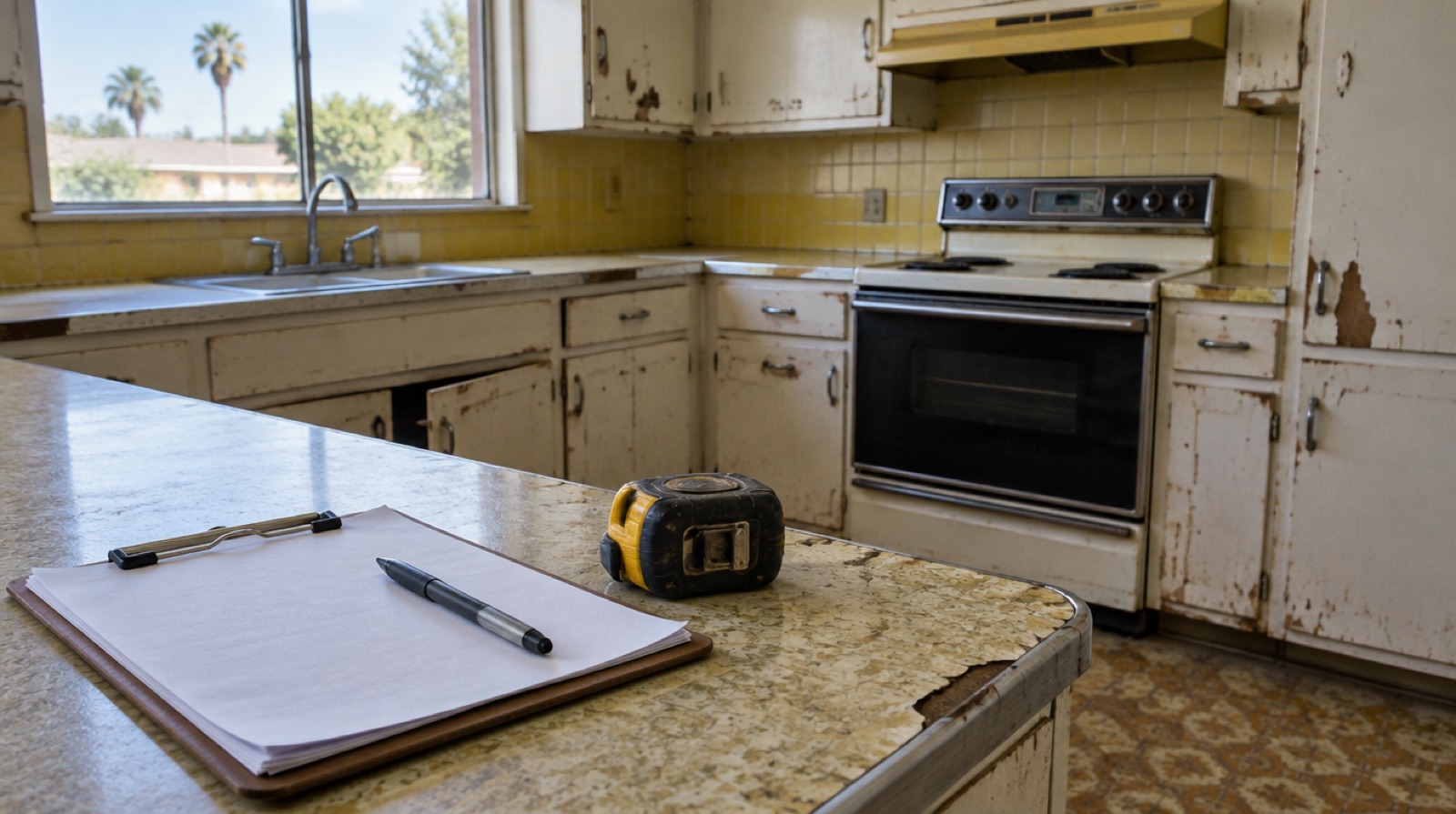
Many probate houses need work, sit empty, or have years of belongings inside. Selling as-is to a cash buyer can make sense when the estate does not have money for repairs, the heirs live far away, or the house is costing money every month in taxes, insurance and utilities. A cash buyer who knows probate will expect the Notice of Proposed Action wait, and in a confirmation sale will expect the chance of being overbid.
NexOffer buys houses in Pomona, Riverside, San Bernardino, Ontario, Rancho Cucamonga, Fontana and nearby cities with no repairs and no commissions, and we can work around the probate calendar. To be honest, though, a cash offer is usually below what a fixed-up home could bring on the open market. If the house is in good shape and the estate can wait, listing with an agent may net the heirs more. In a confirmation sale, open bidding can also push the price up. Get a cash offer, compare it to a realistic listing estimate, and let the numbers decide. Our guide to selling an inherited house in California covers taxes and other next steps.
This is not legal advice
Probate rules depend on the details of each estate and each court's local rules. Before you sign anything or send a Notice of Proposed Action, talk with a California probate attorney. For tax questions about an inherited home, talk with a tax professional.
Questions sellers ask us most
Can I sell a house during probate in California?
Yes. Once the court issues letters and gives the personal representative authority, the house can be sold. With full IAEA authority, the executor sends a Notice of Proposed Action and can usually close without a court hearing. With limited authority, or if an heir objects, the sale needs court confirmation first.
What is the overbid amount in a California probate sale?
Under Probate Code section 10311, a new offer at the confirmation hearing must be at least 10% more on the first $10,000 of the original bid and 5% more on the amount above $10,000. On a $500,000 accepted offer, the first overbid must be at least $525,500. The judge confirms the highest qualified offer.
Does the house have to sell for the appraised value?
In a court confirmation sale, the offer must be at least 90% of an appraisal made within one year before the hearing, under Probate Code section 10309. If the executor has full IAEA authority and sells without court confirmation, that 90% rule does not apply, though the executor still owes the heirs a duty to get a fair price.
What happens if one heir objects to the sale?
An heir who gets a Notice of Proposed Action can send a written objection to the executor. That does not cancel the sale. Under Probate Code section 10589, the executor must then use court supervision to complete it, and the objecting heir gets notice of the hearing and a chance to be heard by the judge.
Sources
- California Probate Code section 13100 (small estate affidavit)
- California Probate Code section 13151 (primary residence petition)
- California Probate Code section 890 (periodic dollar adjustments)
- California Courts Self-Help Guide: When formal probate may not be needed
- California Probate Code section 10501 (limited authority)
- California Probate Code section 10503 (sales under independent administration)
- California Probate Code section 10586 (Notice of Proposed Action timing)
- California Probate Code section 10587 (objection to proposed action)
- California Probate Code section 10589 (effect of objection)
- California Probate Code section 10309 (90% of appraised value)
- California Probate Code section 10311 (overbids at confirmation)
- California Probate Code section 9100 (creditor claim deadline)
- California Probate Code section 12200 (time for final distribution or status report)
- Superior Court of Los Angeles County: Probate
- Superior Court of San Bernardino County: Probate
- Superior Court of Riverside County: Probate